
What drives people to rely on mobile apps to manage fitness routines and daily wellness goals? Health habits today depend on digital platforms that track progress and support consistency beyond gym or clinic visits. Wellness and fitness apps now serve as personal health companions that connect activity data and expert guidance into one experience.
Read this blog to understand how wellness and fitness app development services help businesses build reliable platforms:
Why Do Businesses Invest in Wellness & Fitness App Development Services?
Wellness and fitness apps have become the focus of the routine-building process of users. They assist in monitoring the progress and remaining responsible to individual health objectives.
The following are the main reasons why businesses invest in the services of wellness and fitness app development:
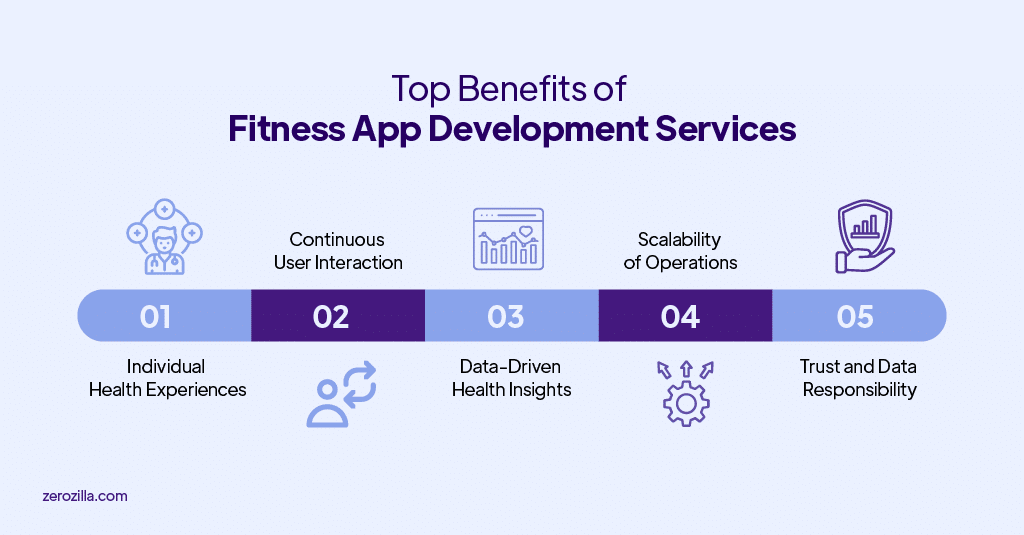
- Individual Health Experiences: Apps create a personalized workout and recommendations based on the activity and preferences of the user. This customization assists users in adhering to habits that are attainable and meaningful to their purposes.
- Continuous User Interaction: Reminders and habit tracking services will ensure that the users are engaged beyond the onboarding stage. Constant interaction helps in the development of routine and minimizes drop-offs.
- Data-Driven Health Insights: Systems gather activity and usage data that drives the trends of fitness and wellness. These insights are useful in assisting the user to see patterns and also guide businesses to refine features.
- Scalability of Operations: Wellness applications enable the expansion of operations based on a modular architecture and cloud computing. Scalability enables businesses to add new programs and services without interfering with the current users.
- Trust and Data Responsibility: Health-related information is handled securely, and this helps to gain confidence among the users. High data practices enhance credibility and long-term adoption of the platform.
Key Use Cases for Wellness and Fitness Applications
Here are the most common ways wellness and fitness applications support structured health routines and measurable progress across different user needs.
- Personalized Fitness and Training Platforms
Fitness applications often serve users who seek structure and direction in their workout routines. These apps base fitness programs on personal objectives and previous achievements, which assists the users to pursue the routines clearly.
Visibility of progress strengthens consistency in the long-term, as the users can associate effort with results. Fitness brands and online trainers use such platforms to provide standardized programs and, at the same time, hold personal accountability to each user. - Holistic Wellness and Mental Health Support Applications
Wellness platforms also expand the fitness boundaries to cover the mental equilibrium as a component of the general health regimens. Such applications bring about disciplined habits that aid in the regulation of stress, quality of sleep, and emotional cognizance in everyday routines.
The habit formation through regular engagement makes the users incorporate the wellness activities into their daily lives. These platforms enable providers to facilitate long-term care experiences as opposed to short-term wellness encounters. - Nutrition and Lifestyle Management Applications
Wellness applications that are nutrition-related relate the eating habits to other health and fitness goals. These apps plan, monitor the intake and nutrition information in daily life, which promotes informed lifestyle decisions. Stability in the patterns of eating and activity enhances the overall wellness performance. The end-users have an integrated perspective of nutrition and fitness instead of having to treat them as distinct endeavors. - Corporate Wellness and Employee Health Platforms
Wellness applications are utilized by organizations to assist in formal employee health programs that go beyond the occasional programs. These sites coordinate the involvement, fitness initiatives, and feedback on progress in common spaces. Inter-team visibility facilitates coherent interaction and group responsibility. Corporate wellness systems help to make the working culture healthier, as they incorporate well-being into the usual work processes. - Coach and Trainer Management Applications
Fitness professionals rely on online media to ensure that relations with clients are organized. Such systems put workouts, performance monitoring, and communication channels at the center, which contribute to the continuity of training cycles. The visibility of progress enables trainers to change direction with time. This design will allow professionals to scale the services but maintain the personalized support.
Core Features of a Modern Wellness or Fitness App
Modern wellness and fitness applications rely on features that connect daily behavior with measurable health outcomes. Each feature supports routine formation, progress awareness, and platform reliability, which together shape long-term user commitment.
- User Onboarding and Profile Setup
Onboarding captures fitness level, health preferences, lifestyle patterns, and personal goals to establish an accurate baseline. Profile data shapes workout intensity, wellness plans, and nutrition guidance. It keeps recommendations aligned with individual capability and intent over time. - Activity and Workout Tracking Modules
Tracking modules record workout type, duration, intensity, repetitions, and recovery intervals across sessions. Historical activity data helps users recognize patterns in performance and effort, which supports consistency and informed adjustments to routines. - Goal Setting and Progress Visualization
Goal-setting frameworks allow users to define short-term targets and long-term health objectives. Visual tools such as charts and milestone indicators translate effort into visible outcomes, which strengthens motivation and accountability. - Nutrition and Meal Planning Tools
Nutrition features organize meal schedules and intake records within structured plans. Users gain visibility into nutritional balance across days and weeks. This feature supports alignment between diet choices and fitness goals in the long run. - Push Notifications and Habit Reminders
Notification systems reinforce routines through scheduled prompts for workouts, hydration, rest, and wellness activities. Habit reminders help users maintain consistency during busy schedules and reduce missed actions. - Community Features and Social Sharing
Community modules support group challenges, progress sharing, and peer encouragement within controlled environments. Social interaction builds accountability and reinforces commitment through shared experiences and collective goals. - Trainer Dashboards and Admin Panels
Trainer and admin panels centralize program management and engagement insights. These tools support personalized coaching and program optimization. They also aid platform governance at scale.
Benefits of Partnering with a Fitness App Development Company
Below are the key benefits of partnering with a fitness app development company that understands user behavior and health data responsibility:
- Deeper User Engagement Through Personalized System Logic
Fitness app development companies design personalization at the system level rather than as surface features. User profiles, historical activity data, goal timelines, and usage frequency feed into recommendation engines that adjust workouts and wellness prompts over time. This alignment between user intent and system response keeps engagement consistent across daily and weekly routines. - Higher Retention Through Progress-Centered Experience Design
Retention improves when users can clearly relate effort to outcomes. Development teams implement progress tracking mechanisms that compare past and present performance and surface milestone achievements. These elements reinforce commitment by giving users tangible evidence of improvement rather than abstract motivation. - Stable Performance Across Devices and Peak Usage Periods
Fitness applications often experience concentrated usage during specific hours and seasonal program launches. A specialized development company plans for these patterns through optimized API responses, efficient state management, and background task handling. This preparation maintains smooth performance across mobile devices, tablets, and connected wearables during high-load periods. - Architecture That Supports Long-Term Platform Growth
Growth introduces complexity through increased users and feature sets. Modular application design allows new capabilities to integrate without disrupting existing workflows. Scalable services and independent components support platform expansion while preserving performance and reliability. - Responsible Management of Sensitive Health Information
Wellness platforms handle personal activity data. They also deal with health indicators and behavioral insights that demand strict governance. Development teams implement controlled access, audit logging, and secure storage practices to protect user information. Strong data responsibility reinforces trust and supports compliance across regions.
Technology Stack Used by Top Wellness App Developers
Here are the core technologies used by top wellness app developers to build scalable and secure fitness platforms:
- Front-End Technologies for Mobile and Cross-Platform Experiences: Top developers use mobile-native and cross-platform frameworks to deliver consistent interfaces across operating systems. These technologies manage real-time activity views and interaction flows while maintaining performance across varied screen sizes and device capabilities.
- Backend Frameworks for Core Logic and Integrations: Backend systems process workout data, manage user sessions, and coordinate integrations with wearables and payment gateways. These frameworks support asynchronous processing and real-time updates, which keep data accurate during active use.
- Databases Designed for Activity and Health Data: Structured databases store user profiles, goals, and long-term records with consistency. Flexible data stores handle activity logs and behavioral events. This separation supports accurate analytics and reliable historical tracking across extended usage periods.
- Cloud Infrastructure for Elastic Scalability and Availability: Cloud platforms provide infrastructure that adapts to changing traffic and usage patterns. Auto-scaling resources and load distribution maintain availability during peak activity. Deployment pipelines support updates without interrupting user routines.
- Security Layers for Wellness and Health Data Protection: Security frameworks protect data across transmission and storage layers. Encryption protocols safeguard personal information, while access controls define system permissions for users, trainers, and administrators.
Challenges in Wellness and Fitness App Development
Here are the main challenges that impact how wellness and fitness platforms are designed and sustained:
- Sustaining User Retention Beyond Initial Adoption
Wellness and fitness apps often attract users during moments of high motivation. Long-term usage depends on how well platforms support habit continuity. As routines evolve and goals shift, systems must respond with relevant guidance and visible progress. Retention weakens when platforms fail to reflect user growth, which turns engagement into a structural challenge rather than a promotional one. - Maintaining Accuracy of Activity and Health Data
User trust depends on the reliability of tracked activity and health metrics, since decisions around workouts and recovery rely on this data. Inconsistent readings or delayed updates disrupt routine confidence and weaken progress evaluation. Accurate data collection and validation, therefore, become central to platform credibility and sustained usage. - Managing Integration with Wearables and Third-Party APIs
Accurate and continuous data often depends on external devices and services, which introduces technical dependencies. Wearables and APIs follow different standards and update cycles, which complicates synchronization. Poor integration leads to fragmented records, which weakens the platform’s ability to present a unified view of user health. - Meeting Data Privacy and Compliance Requirements
As data volume grows through tracking and integrations, governance responsibilities increase. Wellness platforms manage sensitive personal information that requires controlled access and transparent handling. Weak privacy practices affect user trust and regulatory standing. It directly influences adoption and long-term viability.
Case Study: Elevating Engagement: How a Wellness App Transformed Employee Health
Overview:
- Employee wellness programs often struggle to deliver long-term value when participation remains inconsistent.
- A corporate organization faced this challenge as its wellness initiatives failed to convert intent into daily action.
- The organization partnered with Zerozilla to build a wellness application focused on routine formation and measurable engagement.
- The objective centered on creating a system that supports consistent participation rather than occasional involvement.
Challenges:
- The existing wellness efforts relied on scattered activities that employees engaged with briefly before losing momentum.
- We discovered that limited visibility into personal progress made it difficult for users to understand improvement or stay motivated, which further reduced engagement.
- Fragmented tools and manual tracking compounded the problem, leaving the organization without a unified way to monitor activity or assess program effectiveness.
Solution:
- We designed a centralized wellness application that brings activity tracking and real-time feedback into one cohesive user experience.
- Our platform structured wellness participation around achievable goals supported by continuous reinforcement and clear performance indicators, which helped users remain engaged over longer periods.
- Employees accessed the app throughout the day, which helped wellness activities become part of daily routines rather than occasional tasks.
Key Features:
- We introduced gamified wellness challenges that created a sense of progression and rewarded continued participation.
- Our activity and health tracking features established consistent performance records that users could review regularly, which helped them recognize patterns in their behavior.
- We built personal dashboards that translated effort into visible outcomes, which strengthened user motivation and accountability.
- Automated reminders supported routine continuity, which encouraged ongoing participation.
- Administrative dashboards gave the organization clear insight into engagement patterns and overall program effectiveness.
Impact:
- We observed increased employee engagement as wellness activities shifted from isolated events to integrated daily behavior.
- Regular interaction with the platform supported habit formation, which encouraged sustained participation over time.
- Clear progress visibility improved motivation for users, while centralized insights helped the organization evaluate outcomes with greater confidence.
- Our platform helped the organization move from short-lived wellness efforts to continuous engagement across the workforce.
Read the full case study: Elevating Engagement: How a Wellness App Transformed Employee Health
Trends Shaping the Future of Wellness and Fitness Apps
The following are the crucial trends that shape how wellness and fitness applications evolve and support long-term user engagement:
- AI-Driven Fitness and Wellness Guidance
AI systems analyze activity patterns, engagement behavior, and recovery trends to adjust routines over time. Adaptive guidance supports changing fitness levels and prevents stagnation, which helps platforms remain relevant across extended usage periods. - Deeper Wearable and IoT Connectivity
Connected devices provide continuous streams of activity and health data that improve insight accuracy. Unified device integration allows platforms to present consistent narratives rather than isolated metrics. This continuity strengthens routine tracking and long-term analysis. - Unified Wellness Platforms Covering Physical and Mental Health
Modern wellness platforms increasingly combine movement, recovery, sleep, and mental balance within one system. This integrated approach reflects real user needs and supports sustainable health practices beyond exercise alone. - Subscription and Freemium Engagement Models
Flexible pricing structures support adoption while funding advanced features over time. Entry-level access lowers barriers, while premium plans sustain deeper personalization and analytics. Balanced monetization supports platform improvement without limiting reach. - Insight-Led Personalization Across User Journeys
As platforms accumulate data, personalization shifts from static preferences to behavior-based responses. Continuous refinement aligns recommendations with real usage patterns, which strengthens relevance and engagement.
Choosing the Right Wellness and Fitness App Development Partner
- Go with a Partner That Has Health and Wellness Domain Experience
A partner with experience in wellness and fitness understands the sensitivity of health data and the importance of routine continuity. This background helps shape platforms that respect user trust and align features with real health goals. - Select a Team That Understands User Behavior and Engagement Cycles
User adoption and retention depend on how well systems respond to motivation patterns and routine changes. A team that studies engagement behavior designs platforms that support gradual habit formation and sustained use. - Prefer a Development Partner Skilled in Scalable and Secure Architecture
Wellness platforms grow through users, integrations, and data volume over time. A partner with strong architectural expertise designs systems that scale reliably while protecting personal health information. - Pick a Partner with Proven Delivery and Ongoing Support Capability
Fitness and wellness applications require continuous improvement after launch. A partner that provides post-launch support helps maintain platform stability and relevance as user needs and technologies evolve.
Final Thoughts
Wellness and fitness platforms now shape how users build routines and sustain long-term health habits. Businesses entering this space require systems that combine behavioral insight, technical stability, and data responsibility within one application framework. Strong platforms connect activity tracking, guidance, and feedback in ways that remain reliable as user needs evolve. This approach supports engagement, retention, and scalability while maintaining trust around sensitive health information and performance data across extended usage.
Explore Zerozilla Wellness and Fitness App Development Services. We will help you build secure and user-focused fitness platforms with a trusted fitness app development company and top wellness app developers.