The insurance sector has historically been characterized by paperwork, middlemen, and manual claim cycles. But not anymore. The change is happening and ever so fast. In today’s digital-first world, policyholders anticipate immediate access, individualized services, and easy claims processing.
The origin of this drastic change can be traced to the advent of custom mobile app development, which enables insurers to provide safer, quicker, and more intelligent experiences. Mobile apps are revolutionizing the way insurers do business, whether it’s through automating claims, enhancing customer engagement, or simplifying underwriting.
By working with an insurance app development company, insurers can create apps that satisfy regulatory requirements and adapt to the changing user needs.
Why Do Insurance Companies Need Custom Mobile Apps?
The insurance industry demands adept technological solutions, the reason being its complex ecosystem that includes numerous stakeholders, compliance requirements, and sensitive customer data. Today, insurers are increasingly using custom mobile app development for the following reasons:
- Personalized Experiences: AI-powered suggestions, instant quotes, and customized policies create personalized experiences for insurance clients.
- Operational Efficiency: Automation accelerates the pace of claim processing and minimizes paperwork and human error.
- Real-Time Communication: There is a visible increase in user satisfaction and engagement with the help of chatbots and alerts.
- Data-Driven Decisions: Apps can enhance pricing and product design by analyzing risk data and customer behavior.
- Security & Compliance: Custom-built apps ensure adherence to insurance regulations (HIPAA, GDPR, IRDAI, etc.) with enhanced encryption and data protection.
Essential Elements of an Insurance App
A successful insurance mobile app is usable, offers high performance, and is compliant. To provide a flawless experience, the following characteristics are necessary:
- Onboarding and Authentication of Users
Customer trust is ensured through secure sign-up and login using biometrics, OTP, or multi-factor authentication. - Management of Policies
Multiple insurance policies can be viewed, renewed, downloaded, and managed from a single dashboard. - Instant Quotes & High-Quality Calculators
AI-powered calculators use factors like age, risk, and preferred coverage to determine premiums. - Filing and Monitoring Claims
Reduce reliance on manual agents by enabling users to upload images, submit claims, and monitor their status in real time. - Management of Documents
Digital vaults for safely keeping claim documents, policy documents, and identity verifications. - Alerts & Push Notifications
Automated reminders for updates to claims, premium payments, and renewals. - AI Assistants & Chatbots
Virtual assistants that offer round-the-clock assistance with questions, quotations, and policy suggestions. - Including Third-Party Services
APIs for telematics, payment gateways, KYC verification, or health tracking (if you have health insurance). - Dashboard for Analytics
Dashboards for insurers that offer information on product performance, claim trends, and user behavior. - Functionality Offline
Enabling data syncing after the device reconnects to the internet is crucial for distant clients.
Benefits of Mobile Apps
- Enhanced Customer Interaction: A mobile-first experience strengthens customer relationships and promotes referrals and renewals.
- Lower Administration Overhead: Policy issuance and claims automation reduce back-office expenses and workload.
- Improved Risk Control: Integration of IoT and AI helps in risk assessment and mitigation before they become expensive claims.
- Greater Openness: Real-time tracking of claims, premiums, and coverage increases policyholder loyalty and trust.
- Models of Scalable Revenue: Utilizing in-app suggestions and targeted push notifications helps in upselling and cross-selling.
Technology Stack for Developing Insurance Apps
Modern, scalable technologies are used by leading insurance software development companies to satisfy the needs of both customers and insurers.
Front-end:
- React Native and Flutter (Cross-platform)
- Kotlin (Android) and Swift (iOS)
- React and Angular for admin dashboards
Backend:
- Python,.NET, and Node.js for API logic
- Microservices or serverless architecture for scalability
Database:
- Data storage options include PostgreSQL, MongoDB, and Firestore
- ElasticSearch or Redis for analytics and caching
DevOps & Cloud:
- Google Cloud, AWS, or Azure for hosting
- Continuous deployment using Docker, Kubernetes, and CI/CD pipelines
Security:
- AES-256 encryption
- SSL/TLS protocols
- Role-based access control (RBAC)
- Compliance frameworks like ISO 27001 or SOC 2
Case study: Engineering the Next-Gen Digital SOV Platform
Overview
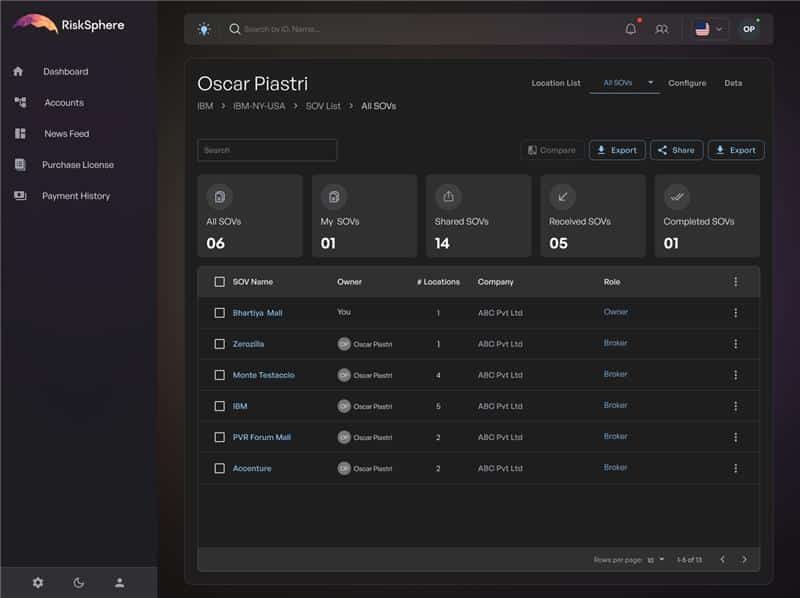
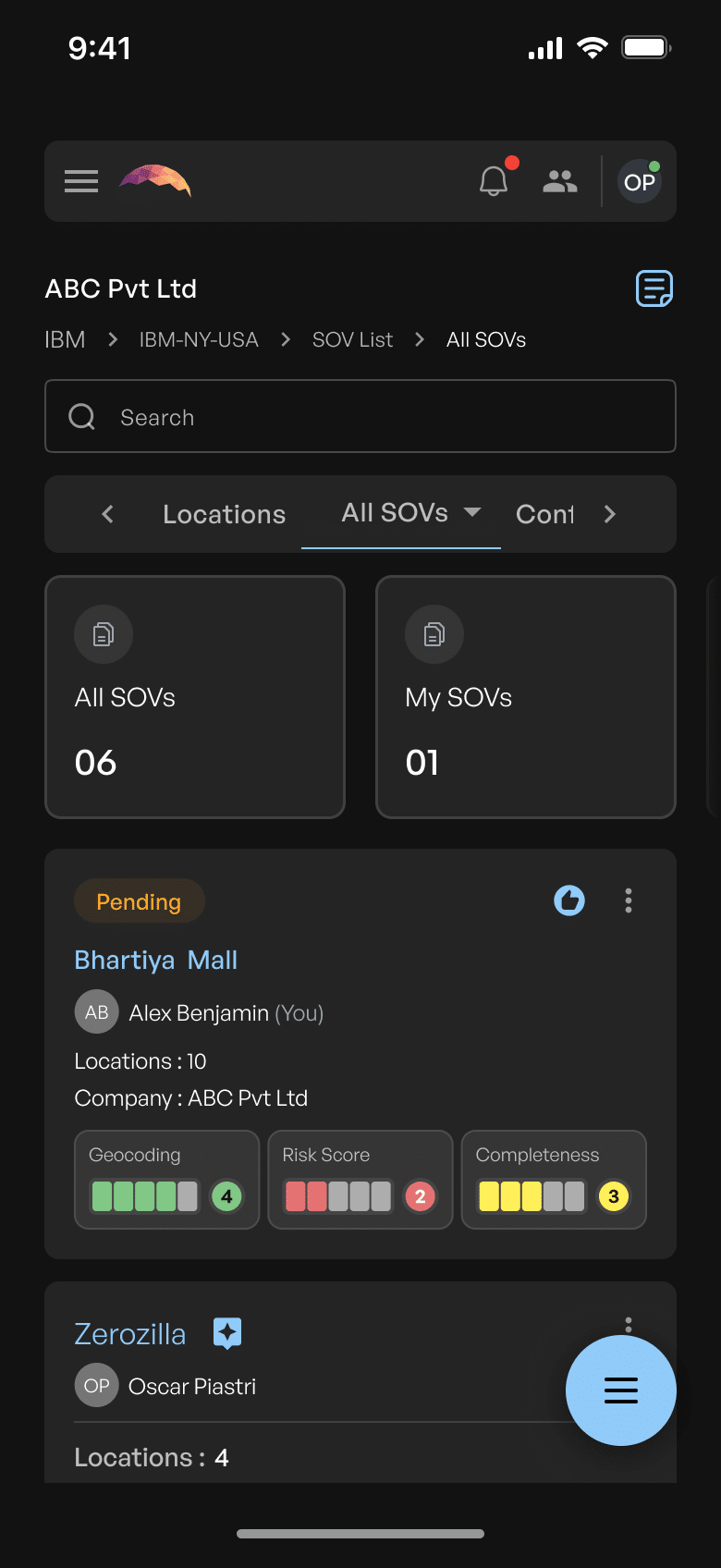
A team of insurance experts partnered with Zerozilla to create a first-of-its-kind Digital Statement of Values (SOV) platform that delivers real-time risk intelligence. The goal was to transform how insurers and policyholders interact with location-based hazard data using geospatial analytics and AI-driven insights on both web and mobile platforms.
Solution
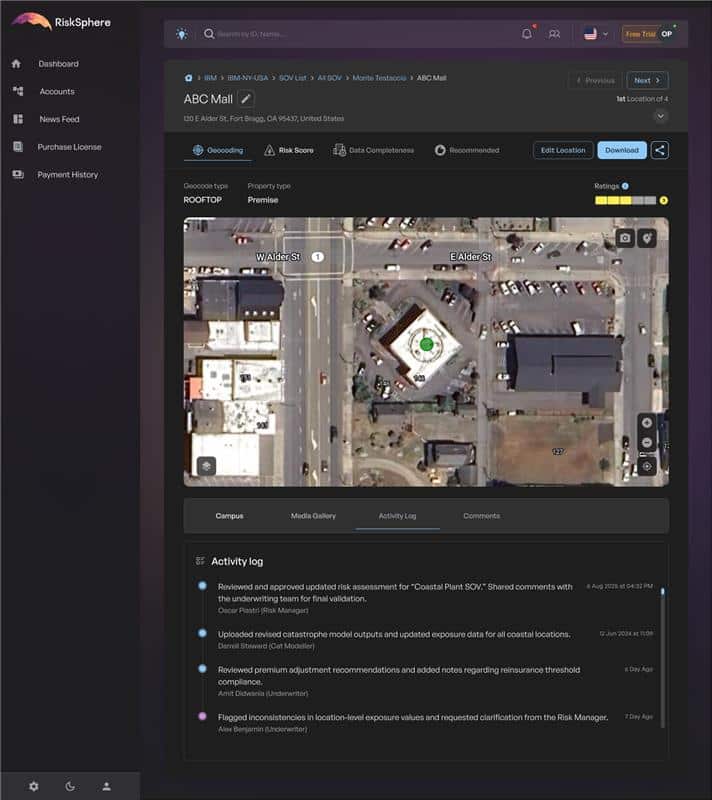
Zerozilla engineered an enterprise-grade web and mobile application built on a serverless architecture for scalability and speed. The solution integrated geolocation APIs, Earth Engine datasets, and real-time notifications to map environmental risks, issue instant hazard alerts, and provide vendors with performance dashboards and monetization tools.
Features
- AI-Based Location Risk Scoring – Automated threat levels by coordinates
- Real-Time Hazard Alerts – Floods, fires, and other environmental events
- Vendor KPIs & Metrics – Custom dashboards for performance insights
- Modular Monetization Engine – Pay-per-usage or risk-tier-based models
- Cross-Platform Access – Unified experience across web and mobile
- Serverless Scalability – Fast, secure, and cost-efficient infrastructure
Impact
- Enhanced accuracy of risk assessments with precise geolocation data
- Enabled instant decision-making through live alerts
- Improved vendor collaboration and service monetization
- Achieved seamless scalability with zero infrastructure overhead
Why It Matters
By integrating real-time risk intelligence with a scalable digital ecosystem, Zerozilla helped modernize insurance workflows, by turning data into actionable insights. This empowered the insurers to move from reactive risk management to proactive, data-driven decision-making.
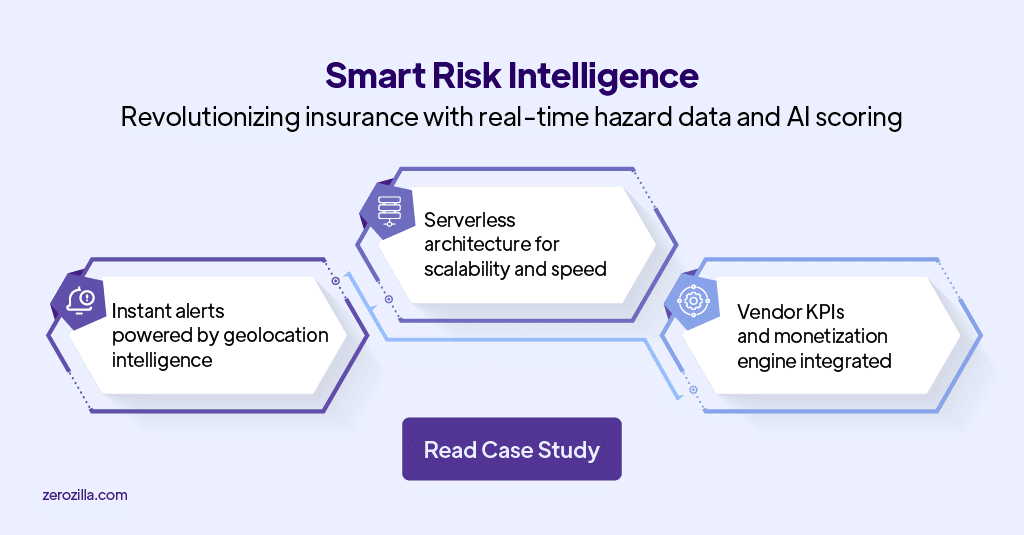
Read the full case study: Insurance Mobile App Development Services
Challenges in Insurance App Development
Coding is only one aspect of creating an insurance app; another is resolving intricate business problems:
- Data privacy: Managing financial and personal information in accordance with stringent legal requirements.
- Complexity of Integration: Integrating new cloud platforms and APIs with legacy systems.
- Regulatory Compliance: Constantly changing international regulations such as HIPAA, IRDAI, and GDPR.
- User Adoption: Creating user interfaces that are sufficiently straightforward for a range of demographics.
- Security Risks: Using advanced authentication to stop fraud and illegal access.
Only a specialized Insurance App Development Company can provide the strategic design and in-depth domain knowledge needed to overcome these.
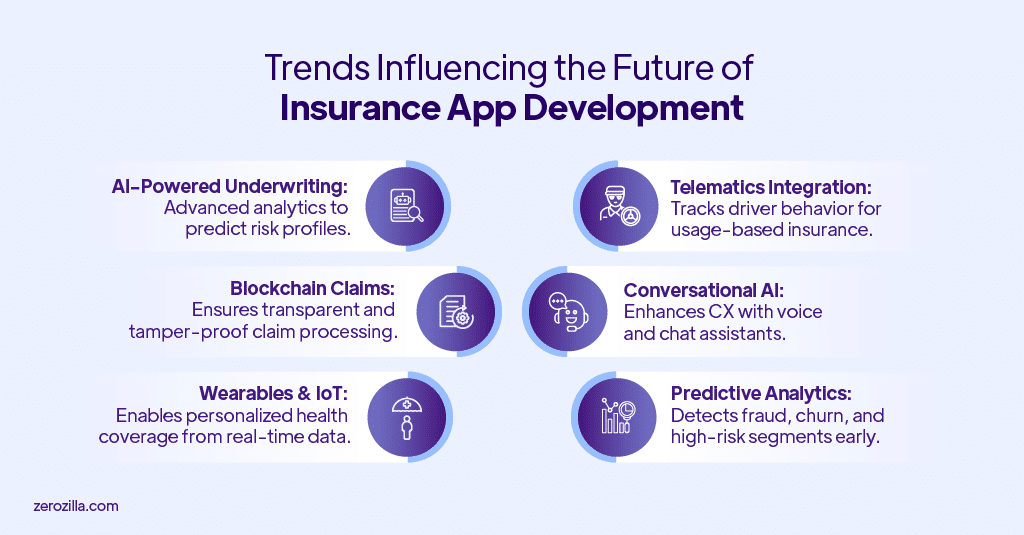
Insurance as a Service (IaaS): The Future
Insurance as a Service (IaaS) represents the next stage of digital transformation in the insurance industry. In this stage, mobile apps serve as fully functional platforms that unite clients, brokers, and suppliers into a single ecosystem.
Insurers can provide better customer service, introduce new products more quickly, and easily maintain compliance with the help of APIs, data analytics, and AI.
For insurers adopting digital innovation, mobile apps are now strategic growth engines rather than merely tools.
Final Thoughts
In today’s world, custom mobile app development is not a luxury; rather, it is a must for any insurance company hoping to maintain its competitive edge.
Choosing the best insurance software development company guarantees not only a reliable, legal solution but also one that is intelligent, scalable, and customer-focused.
Ready to transform your insurance company?
To advance your digital strategy, collaborate with an expert insurance app development company like Zerozilla, that understands how to combine innovation, compliance, and technology.